
One of the best ways to improve your health, build strength, and prevent injuries is strength training. But many people new to exercise think they need expensive gym memberships or high-end equipment to get started. In reality, your own body weight can help you become stronger. These exercises are perfect for people who want to start exercising but don’t want to spend a lot of money or deal with a lot of hassle. Plus, they can be done almost anywhere easily.
For beginners, body weight training is the best option.
Because you use your own body weight as support, body weight exercises are better and easier to start with than jumping right in with heavy weights. They help you develop your form, balance, and flexibility, and over time, they also make you stronger. People often skip exercises because they don’t have the time or space. These exercises can be done at home, in the park, or even during a short break at work.
Squats: A Way to Build Leg Strength
Squats are one of the best body weight exercises to strengthen your legs, glutes, and core. Basic squat: Stand with your feet shoulder-width apart. Bend your knees until you feel like you’re sitting on a chair, then stand back up. Keep your chin up and your knees aligned with your toes. Squats help maintain your balance, posture, and leg strength, making everyday activities like climbing stairs easier.
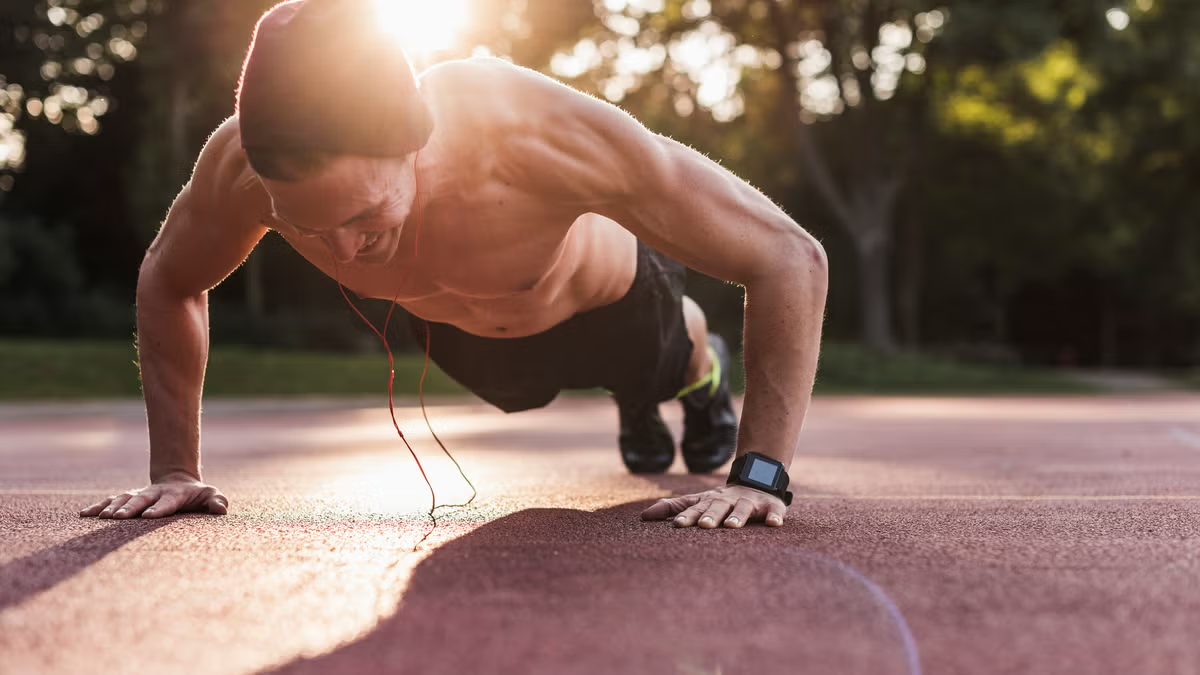
Push-ups strengthen your core and upper body.
Push-ups are a traditional way to build strength because they work the core, chest, shoulders, and forearms. As your strength increases, you can progress to knee push-ups or incline push-ups against a wall or bench. As your proficiency improves, you can experiment with different push-up variations, such as wide-arm push-ups or narrow-grip push-ups. This exercise has many different applications. It strengthens your upper body and stabilizes your core.
Planks: Stabilize your core
A strong core is essential for maintaining balance, good posture, and overall strength. Planks are a simple exercise that’s very effective for strengthening your shoulders, back, and abs. Beginners can start with a plank on their elbows and knees. As your strength increases, you can gradually progress to a full plank on your elbows and toes. Initially, it’s helpful to hold this position for 15-20 seconds. By increasing the time, you’ll build your endurance and core strength over time.
Lunges: Build Strength and Improve Your Balance
Lunges work your quadriceps, leg, glute, and calf muscles. They also improve your balance and agility. Start by stepping forward with one leg. Then lower your hips until both knees form a 90-degree angle. Finally, push yourself back to the starting position. Beginners can use a wall or chair for support if needed. Lunges are a great way to strengthen your lower body and help you move more easily during your daily activities.
Glute Bridges: Stretch Your Core and Glutes
Glute bridges are a great way to work your hips, legs, and lower back without any equipment. Lie on your back with your knees bent and your feet flat on the floor. Squeeze your glutes and lift your hips. Then slowly lower them. This exercise strengthens your back muscles, improves hip mobility, and relieves lower back pain from prolonged sitting.
Chair curls work your shoulders and arms.
You only need a chair to perform this exercise; no other equipment. Chair curls work your chest, shoulders, and arms. Place your hands at your hips and sit on the edge of a sturdy chair. Then, slide your body forward as you lower yourself. Use your arms to push yourself up. To reduce the pressure, beginners can keep their feet close to the chair, while more advanced exercises require your legs to be spread.
Stepping: An Effective Way to Build Strength
Stepping is a great way to build lower body strength because it feels similar to everyday movements like climbing stairs. All you need is a stable surface, such as a step, ladder, or low stool. Lift one foot and push off with your heel. Then lift the other foot and step down. This exercise is great for beginners because it builds strength, balance, and a healthy heart.
Benefits of Bodyweight Training
A major advantage of bodyweight training is its ease of use. You don’t need a gym, fitness equipment, or a large space. Plus, it makes you stronger, more flexible, more balanced, and allows you to train for longer periods of time. Bodyweight exercises are safer for beginners.
Repeat the exercise two or three times a week. Beginners can start with two repetitions per week and gradually increase this as their strength increases. Consistency is more important than strength.
Why Progression Matters
As your strength increases, you can increase the difficulty by increasing the number of repetitions, holding a position longer, or trying more challenging variations. You can progress from knee push-ups to full push-ups, or from a regular plank to a side plank. These slow and steady improvements keep the workout interesting and ensure you build strength without stagnating.
Summary
You don’t need expensive equipment or a gym membership to build strength. Beginners can build strength, endurance, and confidence with simple, do-it-yourself exercises, even from the comfort of your own home. Exercises like squats, push-ups, planks, lunges, and hip bridges work the entire body, making it easier to move and stay healthy. By starting small, focusing on form, and maintaining stability, anyone can build a solid foundation for lasting health.
Frequently Asked Questions
Is it possible for beginners to enhance their strength without using equipment?
Yes. You can use your body weight for support, making bodyweight training perfect for beginners.
How often should I start bodyweight training?
It’s recommended to start with two to three sessions per week and gradually increase the frequency as your strength increases.
3. Do I need to warm up before bodyweight training?
Yes. A short warm-up, including light stretching or walking, can prepare the muscles and reduce the risk of injury.
How long does it take to see results from bodyweight training?
Most people experience improvements in strength and fitness after four to six weeks of regular training.
5. Is bodyweight training effective for long-term fitness?
Yes. Bodyweight exercises are still used by many athletes and fitness enthusiasts as they are a great way to improve strength, flexibility and stability.
